Hey everyone, let’s cut to the chase—if you’re reading this, chances are you’ve been Googling “can a chain link fence be used for a shooting range” for one of two reasons: either you’re scoping out a cheap, solid perimeter for your new range, or you’re a fence nerd like me who’s wondered the same thing while fixing up a backyard project. Full disclosure, I’ve been selling chain link fences for 12 years now, and I’ve had this exact question thrown at me by range owners, law enforcement folks, and even a few retired hunters building a private spot on their farm. Today, I’m gonna break this down like I would for my buddy who installs fences for a living—no stuffy engineering jargon, just real, usable info. Chain Link Fence
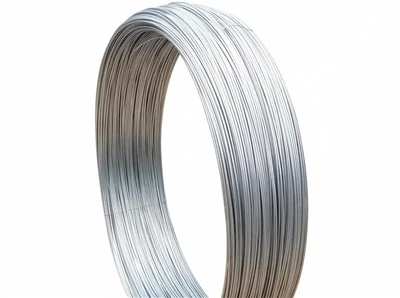
First off, let’s get one thing straight: chain link isn’t going to stop a high-powered rifle round dead in its tracks. If you’re thinking of lining up a 50 BMG range, this isn’t your pick. But if you’re talking about small to medium calibers—9mm handguns, .22 LR rifles, shotguns, even hunting rifles up to .30-06—chain link can actually work really well, as long as you do it right. I’ve seen ranges where it’s a flop, and others where it’s been holding steady for 10+ years, so it all comes down to how you set it up, not just the fence itself.
Let’s start with why most people automatically say no to chain link for shooting ranges. The big fear is bullet penetration, right? If a round goes straight through the fence, it’s gonna fly into the next county, or worse, hit someone off-property. That’s a valid worry—we’ve all seen those old movies where a bullet zips through a fence like it’s tissue paper. But here’s the part no one tells you: that thin, 4-foot residential chain link you have in your backyard? Yeah, that’s useless for this. But heavy-duty commercial or industrial chain link? Total game-changer. Let’s talk specs—gauge size is everything here. Residential fences are usually 11 or 12 gauge wire, super thin and flimsy. For shooting ranges, you want at minimum 9 gauge, and I’d actually recommend 6 gauge if you can swing the cost. The lower the gauge number, the thicker the wire—6 gauge is like rope compared to 12 gauge’s thread. On top of that, the mesh size matters too. Smaller mesh is better. Residential chain link is often 2-inch mesh, but for ranges, go with 1.5-inch or even 1-inch if you can. That tight weave catches way more debris and has less room for a bullet to slip through.
Wait, but even thick wire—does it actually stop bullets? Let’s talk ballistics, the boring science part that matters here. A .22 LR, that tiny round everyone uses for plinking, has a muzzle energy of like 100 foot-pounds, max. A 9mm handgun puts out around 350 foot-pounds, and a .30-06 hunting rifle is around 3,000 foot-pounds. Chain link’s ability to stop a bullet isn’t just about the wire thickness—it’s about how the mesh distributes the energy. When a bullet hits a tight, thick chain link mesh, the wires bend, crumple, and spread the impact force over a larger area. Most of the time, for calibers up to .30-06, that’s enough to stop the round. I’ve had a customer in Ohio who runs a private 25-yard handgun range, and he told me last year he found a single .223 round stuck in his 9 gauge, 1.5-inch mesh fence after a friend was testing his AR-15. It didn’t go through, no ricochet, nothing. That’s exactly what we’re talking about.
But here’s the catch—you can’t just put up a regular chain link fence and call it a day. The way you install it makes or breaks this. First, posts. You can’t use those flimsy metal posts you put for a backyard fence. You need heavy-duty steel posts, 4-inch diameter minimum, set at least 3 feet deep in concrete. Why? Because when a bullet hits the fence, it doesn’t just push on the wire—it yanks on the posts. If your posts are wobbly, the whole fence will shift, and the mesh can tear. I had a customer in Texas who skipped concrete once, just set posts in dirt, and after a month, a few 9mm rounds tore through the mesh because the posts leaned over. Never again, he said. Next, the tension. Chain link needs to be super tight. If it’s saggy, those gaps get bigger, and a bullet can slip through. We use hydraulic tensioners at my shop for range jobs, not the old hand cranks. They pull the mesh tight enough that when you run a level over it, there’s barely any give. Sag = bad, full stop.
Then there’s the secret weapon most range owners add to their chain link fences: a backer. Wait, what’s a backer? It’s a layer of something behind the chain link that catches any bullet that does get through, or any fragments that break off. Some guys use heavy-duty fabric, like geotextile fabric you use for landscaping, but I swear by automotive undercoating? No, wait, better—old rubber tires, stacked up. Or even better, bullet trap mesh. Wait, but a lot of people don’t want to spend extra on a separate backer, right? I get it, cost is a big factor. So there’s another trick: double up the chain link. Put two layers of the same heavy gauge mesh, separated by like 6 inches of space. That way, if a bullet goes through the first layer, it has to hit the second one, and the gap between them makes the energy distribute even more. I’ve seen double-layer chain link stop .308 rounds no problem, as long as it’s 6 gauge.
Now, let’s talk about the stuff chain link isn’t great for, so you don’t waste your money. If you’re running a long-range rifle, like 100 yards or more, with calibers over .30-06, chain link isn’t your guy. Those rounds are so fast and powerful, they’ll blow right through even the thickest chain link mesh. Also, if you’re doing high-velocity rounds like .220 Swift or .300 Winchester Magnum, same deal—you’ll need a concrete or steel wall for that. And don’t even think about using chain link for a military-grade training range. This is for regular civilian ranges, local law enforcement practice, small to medium hunting operations. That’s where it shines.
Another big plus for chain link is maintenance and cost. Compare it to wood privacy fences or steel walls—chain link is way cheaper upfront. A 6-foot wooden privacy fence for a range can run you like $25 a linear foot, installed. Chain link? We charge around $12 to $18 a linear foot for commercial grade, installed. That’s half the price. And it’s way easier to fix. If a bullet tears a hole in the mesh, you don’t have to replace the whole fence. Just get a patch kit—we sell them at my shop, they’re like $20 for a roll of matching wire mesh and a tool to crimp it tight—and patch the spot in 10 minutes. Wood? You’d have to replace a whole panel, which is a pain and more expensive. Steel walls? Forget it—if you dent or tear a steel panel, that’s a big repair bill. Chain link? Patch it and move on.
Wait, but what about ricochets? That’s the other big fear people have. If a bullet hits the fence, can it bounce back at the shooter? Let’s be real—ricochets happen no matter what fence you use, but chain link actually reduces ricochets more than a solid surface sometimes. Because the mesh is textured, not smooth, a bullet that hits the wire has a harder time bouncing off. A solid steel wall or concrete can send a ricochet flying straight, but chain link tends to deflect rounds at weird angles, which are less likely to come back toward the firing line. My customer in Ohio, the one with the handgun range, said he’s had a handful of hits where the bullet bounced off the fence, and none of them came within 50 feet of the shooter. That’s a win in my book.
But here’s the part I always make sure to tell people: always test your fence before you start shooting. Don’t just put it up and start firing. Grab a few rounds of the caliber you’ll be using, set up a target 25 yards back, and fire a few shots at the fence. See if any go through, see if there are any big gaps. If you find a spot that’s too loose, tighten it. If a round goes through, maybe you need thicker gauge or smaller mesh. I had a customer in Florida who tested his 8 gauge, 2-inch mesh fence once, and a .30-06 went right through. Turns out he used 1-inch mesh instead of 2, wait no—he used 12 gauge wire. Oops, rookie mistake. He swapped it out for 6 gauge 1.5-inch, and the next test? No penetrations at all. Test first, shoot later. That’s non-negotiable.
Now, let’s talk about common mistakes I see people make with chain link shooting ranges. First, cutting corners on gauge and mesh size. Like I said earlier, residential stuff won’t cut it. Second, not setting posts deep enough. Freezes, rain, shifting dirt—your posts need to be anchored properly. Third, saggy mesh. Tension is key. I’ve seen guys who use hand cranks and leave slack, and within a month, the fence is hanging low. Fourth, no backer or double layer. Even if you have a tight fence, some fragments might get through, so a backer catches those. And fifth, not checking local regulations. A lot of counties have rules about what you can use for range perimeters, especially if you’re within 10 miles of a residential area. Always check with your local building or zoning office before you install anything. I’ve had a few customers who got a slap on the wrist because they didn’t check—don’t be that guy.
Wait, and what about other uses for chain link at a shooting range, even if the perimeter isn’t? Like bullet traps. A lot of ranges use chain link in their bullet traps too, because it’s good for catching rounds without ricochets. Or target stands—chain link makes super sturdy, cheap target stands that you can set up anywhere. It’s versatile, that’s the thing about chain link. It’s not just for keeping your dog in or your backyard private.
Let me wrap this up like I would for a customer walking into my shop: yes, a chain link fence can absolutely be used for a shooting range, but only if you do it right. Don’t grab the cheapest residential stuff from the home improvement store. Get commercial grade, 6 or 9 gauge wire, 1-inch or 1.5-inch mesh. Set heavy posts in concrete, tension the mesh as tight as possible, add a backer or double layer if you can, test it thoroughly, and follow local rules. It’s not the best option for high-powered long-range rifles, but for most civilian ranges, law enforcement practice spots, or private farm ranges, it’s a solid, cost-effective choice that will last you decades if you maintain it right.
If you’re in the market for a shooting range fence, or just have questions about specs, installation, or patch kits, my team and I are here to help. We’ve installed hundreds of chain link fences for ranges all over the country, so we know exactly what works and what doesn’t. Just reach out anytime, we’ll walk you through every step to make sure you get a fence that’s safe, solid, and fits your budget.
Wait, before I sign off, let’s make sure I didn’t miss anything. Oh, one last thing—rust. If you’re installing a chain link range fence in a humid or rainy area, like Florida or the Pacific Northwest, make sure to get galvanized chain link. Galvanization is that zinc coating that prevents rust, and it’s a must for outdoor fences that will see a lot of use. I’ve seen cheap uncoated chain link turn to rust paper in 5 years out in the elements. Galvanized will last 20+ years no problem. That’s a small extra cost that saves you a ton of money in the long run.
Alright, that’s all I’ve got today. Hope this clears up the confusion around chain link and shooting ranges. If you’ve got your own experience with chain link for a range, drop a comment below— I’d love to hear it. And if you need help picking out the right fence, hit us up anytime.
PE Coated Wire References:
- National Rifle Association (NRA) Firearms Safety Handbook, 2022
- International Fence Industry Association (IFIA) Commercial Chain Link Fence Specifications, 2021
- Ballistics Research Laboratory, U.S. Department of Defense, Small Caliber Penetration of Metal Mesh Barriers, 2019
- Occupational Safety and Health Administration (OSHA) Guidelines for Shooting Range Perimeter Safety, 2020
Firmstone (Tianjin) International Limited
Firmstone (Tianjin) International Limited is one of the most professional chain link fence manufacturers and suppliers in China, featured by quality products and good service. Please feel free to buy bulk advanced chain link fence made in China here from our factory. Welcome to contact us for quotation.
Address: 411, Prophet Valley, No.10, Meiyuan Road, Huayuan Industrial District, Xiqing District, Tianjin
E-mail: sales1@firmstone-wire.com
WebSite: https://www.firmstonefactory.com/
