If you’ve ever stood back and watched an aluminum lift zip a construction worker, painter, or window washer safely 20 feet (or higher) above the ground, you might assume the equipment itself is the only line of defense between someone and a serious fall. As a supplier of aluminum lifts, I’ve spent the last decade working side-by-side with contractors, facility maintenance teams, and even small painting businesses, and I can tell you this: nothing takes the place of following clear, step-by-step emergency procedures—both before you even step onto the lift and as soon as something goes wrong. Aluminum Lift
Aluminum lifts are popular for good reason: they’re lighter than steel lifts, easy to move between job sites, and strong enough to handle most routine height work, from changing light bulbs to accessing warehouse inventory. But that portability comes with a tradeoff. Unlike large, permanent scissor lifts, these units are often moved by hand, set up on uneven asphalt or concrete, and operated by people who might only use them a handful of times a year. I’ve seen a operator skip a pre-use check because “it worked fine last week,” and before we could even finish the call to service, they’d hit a soft spot in the parking lot and tilt the lift halfway. I’ve also had a customer call at 2 a.m. panicking because their worker got stuck 15 feet up when the lift’s motor died mid-reach. None of these situations have to turn into accidents, though, if you know exactly what to do in an emergency.
Let’s start with the truth: most lift emergencies aren’t sudden. They build over small oversights. That’s why the first line of defense is a pre-use emergency check—something so many operators brush off as paperwork or a time-waster. When I walk through a job site with a new client, I don’t just hand them a lift manual and leave. I sit with their lead operator and walk through 10 non-negotiable checks that take 5 minutes total, but prevent 90% of common lift issues. First, I have them inspect the base plates and outriggers (if the lift is a scissor-style aluminum unit) for cracks, bent pins, or missing rubber pads. A friend runs a small plumbing company out of Cleveland, and last year their lead tech noticed a bent base plate pin during this check—turns out when they moved the lift to a bathroom job, they’d dragged it over a concrete curb and nicked the pin. If he’d missed that, setting it up would have put the whole lift at risk of tipping. Next, they test the emergency stop button. I know it feels silly to press a big red button when the lift is on the ground, but this is the only tool that will cut power fast if something goes wrong up top. I tell every customer to do this check before every single use—no exceptions, even if it’s the same lift from yesterday. Finally, they verify that the battery has a full charge, the control panel lights work, and the safety railings (the ones that click into place) aren’t loose. I once had a customer skip the railing check, and when a painter leaned forward to reach a wall, a railing slipped out of its lock. They caught their balance, but it was a 10-foot drop that could have been life-altering. That’s the kind of story that makes me refuse to cut corners on these checks.
Now, what if an emergency actually happens? Let’s break down the most common aluminum lift emergencies and exactly what to do when they occur, step-by-step, no guesswork.
The first and most frequent emergency: the lift gets stuck mid-reach or at height. This is what that 2 a.m. call was about, and it’s almost never the end of the world—if you stay calm. The mistake most operators make here is panicking and trying to climb down on their own, or yanking on the lift’s controls to move it again. That’s how people fall. Here’s the correct sequence. First, immediately press the emergency stop button. This cuts all power to the lift so it doesn’t shift or move unexpectedly. Second, stay in the lift’s platform. I know it’s tempting to climb over the rail or try to lower yourself, but aluminum lifts are designed with their structure intact for a reason—staying put keeps you stable and gives rescuers a clear, safe way to get to you. I’ve seen one operator climb out of a stuck lift and slip on a metal crossbar, breaking their wrist, all because they thought help would take too long. It only takes 15 to 20 minutes for a trained person to respond to a lift call, even on a busy job site. Third, if the lift has a manual lower crank (all quality aluminum lifts have this, by the way—something my company makes a point to include), locate the control panel on the side of the base, not the platform. Never try to use the platform’s controls for manual lower—they’re wired to stop automatically if power fails, and forcing them can damage the mechanism. Turn the crank slowly in the direction labeled “lower,” watching the scissor arms or mast come down evenly. If you don’t have a manual crank (and if your lift doesn’t, that’s a red flag), call for emergency services immediately. Don’t try to jury-rig a fix with a ladder or another tool—that’s how accidents turn fatal.
The second most common emergency: the lift tips. This is rare, but it happens when someone sets the lift on uneven ground, or overextends the platform by leaning too far. If you feel the lift start to tilt, your first move is also to hit the emergency stop. Next, don’t jump. Jumping throws your weight off balance, which can make the lift tip further or even collapse. Instead, grab onto the railings and hold on tightly, leaning in the opposite direction of the tilt to keep your own center of gravity aligned with the lift’s. I had a customer last year set their aluminum lift on a sloped gravel path to paint a garage door. The front wheels slipped, and I got a call mid-afternoon while I was on another job. When I got there, the operator was sitting in the platform, holding on, and the lift was tilted about 10 degrees—no further, because he didn’t jump. By staying in place, we were able to stabilize the lift with a portable jack and lower him down without injury, whereas if he’d jumped, he would have fallen 10 feet onto the gravel. Once the lift is stable, never try to reposition it until it’s been inspected by a technician. Even a small tilt can bend the scissor arms or loosen bolts, and running the lift after a tilt can cause a full collapse.
A less talked-about emergency: a power failure that leaves you stuck between floors. This is different from a stuck lift at full height—here, the lift is partway up, so you can’t safely climb down the side and can’t reach a manual crank easily. Again, the first step is emergency stop. Next, call your job site’s supervisor or the lift’s operator manual for instructions, but if you’re alone, call 911. Most fire departments have training for lift rescues, and they’ll bring specialized equipment to lower you safely without risking the lift’s structure. I once worked with a maintenance tech who got stuck on the third floor of a warehouse on a windy day—power went out mid-reach, and he was 8 feet above the floor. He tried to climb down the lift’s mast and slipped, scraping his arm. That’s a mistake he told me he’d never make again, and now he makes a point to remind every new tech on his team: if you’re stuck partway up, don’t move. Wait for help.
There are also small, job-site specific emergencies that still need a procedure. For example, if you’re working near power lines and the lift makes contact with an energized wire. This is a rare but deadly emergency. If you feel a tingle in the platform or see sparks, do not touch anything metal on the lift. Hit the emergency stop immediately, and yell for everyone around you to stay at least 20 feet away from the lift. Never try to get off the lift, and never let anyone approach you until the power company has confirmed the line is dead. I can’t stress this enough: aluminum is a conductor of electricity, so even a small contact with a power line can kill someone standing on the platform. My company includes a 10-foot clearance rule in every lift’s manual, and I make sure every customer posts that rule right next to the lift’s control panel.
Now, as a supplier, I don’t just sell lifts and leave customers to figure out these procedures on their own. Over the years, I’ve learned that the best way to prevent emergencies is to train operators, not just provide equipment. Every lift my company ships comes with a 20-minute training video tailored to the unit, plus a printed emergency cheat sheet that stays taped to the base of the lift. We also offer free on-site training for customers who buy five or more lifts, because I know that even the best manual doesn’t stick in someone’s head if they only use the lift once a month.
I’ve talked to too many people who see aluminum lifts as “just a ladder on wheels,” but that’s a dangerous myth. A ladder can be lowered if you need to get down, but a lift is a mechanical piece of equipment that relies on checks, procedures, and trained operators to keep people safe. Last year, I visited a job site where a contractor told me he’d been using the same aluminum lift for 12 years without a single emergency. When I asked what his procedure was, he told me: “I do a quick check of the wheels and the stop button, I never lean over the rail, and if something feels off, I stop. That’s it.” It’s simple, but it works—because it’s consistent, and it follows the core emergency rules we’ve been talking about.
If you’re a contractor, facility manager, or even a small business owner looking to add aluminum lifts to your team, remember this: emergency procedures aren’t just rules on a page. They’re the difference between a small problem and a serious accident. Skipping a pre-use check, panicking when something goes wrong, or trying to fix a problem on your own is never worth the risk.

If you have questions about lift emergency procedures, need to review our lift line, or want to schedule training for your team, feel free to reach out to connect for a consultation.
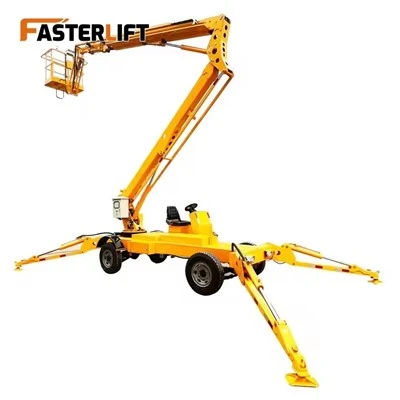
Articulated Boom Lift References
Occupational Safety and Health Administration. (2023). Powered Industrial Trucks and Aerial Lifts: Safety Guidelines. U.S. Department of Labor.
National Center for Construction Education and Research. (2022). Aerial Lift Safety: A Practical Guide for Operators. NCCER Press.
American National Standards Institute. (2021). Standard for Manually Propelled Aerial Work Platforms (ANSI/SIA A92.3). American National Standards Institute.
Shandong Faster Machinery Co., Ltd.
Shandong Faster Machinery Co., Ltd. is one of the most reliable aluminum lift manufacturers and suppliers in China. With a professional production team, we are able to meet the needs of the majority of our customers. Please rest assured to buy advanced aluminum lift made in China here from our factory.
Address: No.76-4, Hainan Island Road, Qingdao, China.
E-mail: sales@fasterlift.com
WebSite: https://www.fasterlift.com/
