If you’ve ever wondered how touchscreens work, or why those flexible sensors in wearable fitness trackers can stretch without breaking, you’re almost certainly interacting with conductive polymers. As a supplier who’s spent 12 years working with these materials—helping teams across automotive, electronics, and biomedical industries scale their next-gen designs—I’ve seen firsthand how conductive polymers aren’t just another lab curiosity. They’re a foundational material that bridges the gap between plastics (cheap, flexible, moldable) and metals (high conductivity, structural strength). Today, I want to break down their core properties, explain why they matter, and how we’ve tailored them for real-world use cases that many manufacturers struggle to pull off with standard materials. Conductive Polymer

First, let’s get a basic definition out of the way, because even seasoned engineers sometimes mix up conductive polymers with other conductive materials. Unlike traditional polymers (think plastic water bottles, insulation for wires) which are full of covalent bonds that lock electrons in place, conductive polymers—also called intrinsically conductive polymers (ICPs) or conjugated polymers—have a unique molecular structure: alternating single and double carbon bonds along their polymer backbone. That structure creates a long “conjugated” chain where electrons can move freely along the backbone, and even jump between adjacent chains via something called pi-pi stacking. No external additives needed, though we often dope them to boost conductivity for specific applications. That’s a key distinction from filled conductive materials, where you mix metal or carbon particles into a plastic matrix to get conductivity—those can be brittle, wear out over time, and don’t handle fine molding as well as ICPs.
Now, let’s dive into the properties that make conductive polymers game-changing, and why they’re not just a gimmick for labs. The first and most obvious is conductivity, but not all conductivity is equal. We tailor our grades to hit conductivity ranges from 10⁻⁸ S/cm (semi-conductive, for static dissipation) up to 1000 S/cm and higher (near-metal conductivity, for things like flexible circuit traces). For context: regular plastic has a conductivity of ~10⁻¹⁴ S/cm, copper is ~5.9 x 10⁷ S/cm, so we’re not competing with copper, but we fill a sweet spot between semi-conductive plastics and metal coatings. That range is perfect for a ton of applications: static discharge (ESD) packaging for semiconductors, flexible electronics, even biomedical devices where you don’t want the high conductivity of metals interfering with biological signals.
Second, the flexibility and mechanical tunability of conductive polymers are their biggest superpower, and what sets them apart from rigid metals or ceramic conductors. Standard metals crack or break when stretched more than 1-2% of their original length, but many of our conductive polymer grades can stretch up to 500% while retaining most of their conductivity. That’s why we supply materials for wearable heart monitors that wrap around a patient’s chest, or foldable smartphone displays that last through thousands of bends. The flexibility comes from the polymer’s amorphous structure, not the rigid crystalline structure of metals. We can also adjust mechanical properties by tweaking the polymer’s molecular weight or blending it with elastomers—so if a customer needs a material that’s both conductive and stretchy for a skin patch, we can adjust the formula to hit exactly that balance.
Third, processability is a property that’s often overlooked but makes conductive polymers practical for mass manufacturing. Unlike inorganic conductors, which require high-temperature sintering or vacuum deposition that’s expensive and low-yield, many conductive polymers are soluble in common solvents or can be melt-processed at relatively low temperatures (below 200°C, often lower) similar to standard plastics. That means we can roll-coat them into thin films, 3D print them into complex shapes, or injection mold them into tiny parts—all at scale, which is a huge win for manufacturers trying to avoid the high costs of traditional metal deposition. We’ve worked with a medical device maker that switched from gold-coated PET (which cost $12 per square foot) to our conductive polymer film (which costs $2.10 per square foot) for their disposable glucose sensor strips, with zero loss in performance.
Fourth, chemical and environmental stability—wait, is that true? Because early conductive polymers, like polyacetylene, were super unstable, breaking down in air or moisture. But modern ICPs have come a long way. We formulate our materials with stabilizers that protect against oxidation, moisture, and UV light, so they can last 5+ years in outdoor applications or 10+ years in indoor electronics. For example, a major automotive supplier used our conductive polymer coatings for their electric vehicle battery cooling tubes: the material is resistant to coolants, vibration, and temperature swings from -40°C to 120°C, and still retains 90% of its conductivity after 1,000 hours of accelerated testing. That’s a far cry from the 1970s lab versions that dissolved in water.
Fifth, optoelectronic properties—conductive polymers are semiconductors, so they interact with light in unique ways. That’s why they’re used in organic light-emitting diodes (OLEDs), solar cells, and photodetectors. Unlike inorganic semiconductors like silicon, conductive polymers are solution-processable, so you can print large-area OLED panels or flexible solar films at low cost. We supply a grade of PEDOT:PSS (the most widely used conductive polymer) that’s transparent, so customers use it for touchscreen electrodes that don’t block light, or for organic solar cell active layers. That transparency is impossible with metal films, which are opaque, so it opens up design possibilities that metals can’t touch.
Now, let’s talk about common misconceptions I hear as a supplier, because even engineers get these wrong. First, conductive polymers aren’t just for flexible electronics—they’re used in anti-static packaging for microchips (to prevent static discharge that ruins chips), electromagnetic interference (EMI) shielding for medical devices, and even in batteries as electrode materials. Second, they’re not all the same: PEDOT:PSS, polythiophene, polyaniline, and polypyrrole are the main commercial grades, each with its own strengths. Polyaniline, for example, is cheaper and more chemically stable for coatings, while PEDOT:PSS is more transparent and conductive for electronics. We help customers pick the right grade based on their application, not just go for the most popular one.
A real example: last year, a startup developing soft robotic grippers reached out to us. They’d been using carbon-filled silicone, which was too stiff, cracked when stretched, and only retained conductivity in a small range of motion. We supplied our stretchable conductive polymer blend, which stretches 300%, is soft enough to grip delicate fruit without damaging it, and maintains conductivity even after 10,000 cycles of bending. They switched, and their product launched 6 months earlier than planned, because they didn’t have to rework their design to accommodate the rigid carbon filler.
If you’re a manufacturer, engineer, or designer working on a project where standard materials (metal, plastic, ceramic) aren’t cutting it—whether you need flexibility, low cost, transparency, or specific conductivity—conductive polymers are almost certainly worth evaluating. As a supplier, we don’t just send you a sample and walk away: we work with you to adjust formulations, test for your specific environmental conditions, and scale production to match your volume, whether that’s 100 square feet of film or 100,000 injection-molded parts. No matter how niche your application is, we’ve got the experience to tailor conductive polymers to fit your needs.
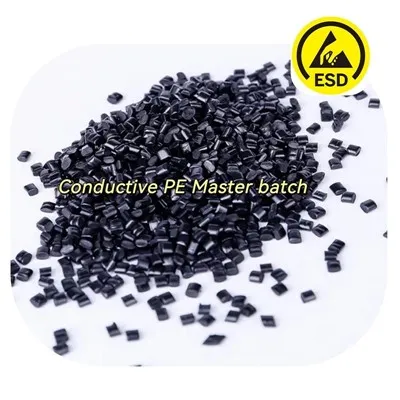
If you’re ready to test a sample, discuss a custom formulation, or learn more about how conductive polymers can solve your material challenges, reach out to our team to start a conversation. We’ll work with you to find the right material, no matter your industry or project scale.
Antistatic Additives References:
- Skotheim, T. A., & Reynolds, J. R. (2005). Handbook of Conducting Polymers. CRC Press.
- Heeger, A. J. (2001). Semiconducting polymers: the third generation of materials. Reviews of Modern Physics, 73(3), 681-700.
- Nalwa, H. S. (Ed.). (1997). Handbook of Organic Conductive Molecules and Polymers. Wiley.
- Groenendaal, L., Jonas, F., Freitag, D., Pielartzik, H., & Reynolds, J. R. (2000). Poly(3,4-ethylenedioxythiophene) and its derivatives: past, present, and future. Advanced Materials, 12(7), 481-494.
- Kim, Y., et al. (2018). Stretchable conductive polymers for wearable electronics. Nature Reviews Materials, 3(1), 1-17.
Jiangxi Sugo Advanced Materials Co., Ltd.
With abundant experience, we are one of the most professional conductive polymer manufacturers in China. Please feel free to buy high quality conductive polymer in stock here and get free sample from our factory. We also accept customized orders.
Address: 1st Fugong Rd, Futian Industrial Park, Dingnan, Ganzhou City, Jiangxi Prov., R.P.C 341900
E-mail: EILEEN@SUGOPLAS.COM
WebSite: https://www.sugo-esd.com/
