Hey there! I’m a supplier of corrugated transformer tanks, and I’ve been in this business for quite a while. One of the most common questions I get from customers is how to enhance the mechanical stability of these tanks. Well, I’m here to share some insights based on my experience and knowledge. Corrugated Transformer Tank

First off, let’s understand why mechanical stability is so important. Corrugated transformer tanks are used to house transformers, which are crucial components in power distribution systems. These tanks need to withstand various mechanical stresses, such as vibrations, impacts, and external forces. If the tank isn’t mechanically stable, it can lead to all sorts of problems, like leaks, damage to the transformer, and even system failures.
So, how can we enhance the mechanical stability of a corrugated transformer tank? Here are some key strategies:
1. Material Selection
The choice of material is fundamental. We usually use high – quality steel for our corrugated transformer tanks. Steel has excellent strength and durability, which are essential for withstanding mechanical stresses. But not all steels are created equal. We look for steels with high yield strength and good ductility. High yield strength means the steel can resist deformation under stress, while good ductility allows it to bend without breaking.
For example, we often use a type of low – alloy high – strength steel. This steel contains small amounts of alloying elements like manganese, chromium, and nickel, which enhance its mechanical properties. It’s more expensive than regular steel, but the investment is worth it in terms of long – term stability and performance.
2. Corrugation Design
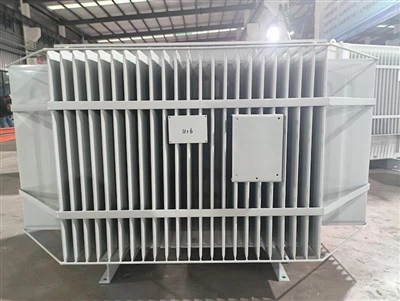
The corrugation design of the tank plays a huge role in its mechanical stability. The corrugations act like ribs, providing additional strength and stiffness to the tank. When designing the corrugations, we consider factors such as the depth, pitch, and shape of the corrugations.
A deeper corrugation generally provides more strength. However, there’s a limit to how deep we can go, as it can also increase the weight and cost of the tank. The pitch, or the distance between adjacent corrugations, also affects the stability. A smaller pitch can increase the overall stiffness of the tank, but it may also make the manufacturing process more difficult.
As for the shape of the corrugations, we’ve found that a trapezoidal shape works well. It provides a good balance between strength and manufacturability. The trapezoidal corrugations distribute the stress more evenly across the tank surface, reducing the risk of local stress concentrations.
3. Welding and Assembly
Proper welding and assembly are crucial for ensuring the mechanical stability of the tank. When we weld the different parts of the tank together, we use high – quality welding techniques and materials. The welds need to be strong and free of defects.
We also pay close attention to the assembly process. All the components of the tank need to be properly aligned and tightened. For example, the bolts and nuts used to connect different parts should be tightened to the correct torque. If they’re too loose, the tank may become unstable; if they’re too tight, it can cause damage to the parts.
4. Reinforcement
In some cases, additional reinforcement may be necessary to enhance the mechanical stability of the tank. We can add internal or external reinforcements, depending on the specific requirements.
Internal reinforcements can include stiffeners or braces. These are usually made of steel and are welded inside the tank to provide additional support. External reinforcements, on the other hand, can be in the form of frames or brackets. They can help distribute the external forces more evenly across the tank surface.
5. Quality Control
Quality control is an ongoing process throughout the manufacturing of the corrugated transformer tank. We have a strict quality control system in place to ensure that every tank meets the highest standards.
We conduct various tests, such as non – destructive testing (NDT) to check for internal defects in the welds and materials. We also perform mechanical tests, like pressure tests and vibration tests, to evaluate the mechanical stability of the tank. If any issues are detected, we take immediate action to correct them.
6. Environmental Considerations
The environment in which the transformer tank operates can also affect its mechanical stability. For example, if the tank is located in an area with high seismic activity, we need to design it to withstand seismic forces. We can use special seismic – resistant designs and materials to enhance its stability.
Similarly, if the tank is exposed to extreme temperatures, we need to consider the thermal expansion and contraction of the materials. We can use materials with low thermal expansion coefficients and design the tank to accommodate these changes.
7. Maintenance
Regular maintenance is essential for maintaining the mechanical stability of the corrugated transformer tank. We recommend that our customers perform routine inspections to check for any signs of damage or wear.
During the inspections, they should look for things like cracks in the tank, loose bolts, and signs of corrosion. If any issues are found, they should be addressed promptly. For example, if there’s a crack in the tank, it should be repaired as soon as possible to prevent it from spreading.
In conclusion, enhancing the mechanical stability of a corrugated transformer tank requires a combination of factors, including material selection, corrugation design, welding and assembly, reinforcement, quality control, environmental considerations, and maintenance. By paying attention to these aspects, we can ensure that our tanks are reliable and can withstand the rigors of real – world applications.
If you’re in the market for corrugated transformer tanks and want to learn more about how we can provide you with high – quality, mechanically stable products, feel free to reach out to us. We’re always happy to have a chat and discuss your specific needs. Let’s work together to find the best solution for your power distribution requirements.
Pole Mounted Transformer Oil Tank References
- "Steel for Structural Applications" – A handbook on steel properties and applications.
- "Transformer Tank Design and Manufacturing" – A technical guide on the design and production of transformer tanks.
- "Mechanical Engineering Principles" – A general textbook on mechanical engineering concepts relevant to tank stability.
Nantong Zhihe Electric Co., Ltd.
As one of the most professional corrugated transformer tank manufacturers and suppliers in China, we’re featured by quality products and low price. Please rest assured to wholesale cheap corrugated transformer tank made in China here from our factory. Customized orders are welcome.
Address: NO.202 Jianghai West Road, Hai’an Town, Hai’an City, Jiangsu Province
E-mail: colt.ntzh@gmail.com
WebSite: https://www.ntzhelectric.com/
