Can PHE Plates & Gaskets Resist High Temperatures? PHE Plates & Gaskets

As a supplier of PHE (Plate Heat Exchanger) plates and gaskets, I’ve often been asked about their ability to withstand high temperatures. This is a crucial concern for many of our customers, as high – temperature applications are common in various industries such as chemical processing, power generation, and food and beverage production.
Understanding PHE Plates and Gaskets
Before delving into their high – temperature resistance, let’s briefly understand what PHE plates and gaskets are. Plate heat exchangers are devices used to transfer heat between two or more fluids. The PHE plates are the main components that provide the surface area for heat transfer. They are typically made of materials like stainless steel, titanium, or other alloys. These materials are chosen for their corrosion resistance, thermal conductivity, and mechanical strength.
Gaskets, on the other hand, are used to seal the spaces between the plates, preventing fluid leakage and ensuring that the hot and cold fluids flow through their respective channels. Gaskets are usually made of elastomeric materials or other polymers, each with its own set of properties.
High – Temperature Resistance of PHE Plates
The high – temperature resistance of PHE plates largely depends on the material they are made from.
Stainless Steel Plates
Stainless steel is one of the most commonly used materials for PHE plates. It has good heat – resistant properties, with some grades of stainless steel able to withstand temperatures up to around 800 – 1000°C (1472 – 1832°F). For example, austenitic stainless steels like 304 and 316 are often used in heat exchangers. They are known for their excellent corrosion resistance in addition to their heat – handling capabilities. At high temperatures, stainless steel maintains its mechanical integrity to a certain extent, which is important for the structural stability of the heat exchanger. However, as the temperature rises beyond its optimal range, stainless steel may experience oxidation and a decrease in its mechanical properties over time.
Titanium Plates
Titanium is another material that offers high – temperature resistance. Titanium PHE plates can withstand relatively high temperatures, typically up to around 300 – 500°C (572 – 932°F). Titanium has a high strength – to – weight ratio and is highly resistant to corrosion, especially in harsh chemical environments. In high – temperature applications where corrosion is a major concern, titanium plates can be a great choice. However, titanium is more expensive than stainless steel, which can be a limiting factor for some cost – sensitive applications.
Other Alloy Plates
There are also other alloy materials used for PHE plates, such as nickel – based alloys. These alloys are designed to have excellent high – temperature strength and corrosion resistance. They can withstand temperatures well above 1000°C (1832°F) in certain applications. Nickel – based alloys are often used in high – end, demanding applications in the aerospace and chemical industries, where the heat exchanger needs to operate under extreme conditions.
High – Temperature Resistance of Gaskets
The gaskets in a PHE are equally important when it comes to high – temperature applications. The choice of gasket material is crucial as it directly affects the sealing performance at high temperatures.
Nitrile Rubber (NBR) Gaskets
Nitrile rubber is a common gasket material. It has good resistance to oil and some chemicals. However, in terms of high – temperature resistance, NBR has its limitations. It can typically withstand temperatures up to around 100 – 120°C (212 – 248°F). At higher temperatures, NBR may start to degrade, losing its elasticity and sealing properties. This can lead to fluid leakage and a decrease in the overall efficiency of the heat exchanger.
Ethylene Propylene Diene Monomer (EPDM) Gaskets
EPDM gaskets offer better high – temperature resistance than NBR. They can withstand temperatures up to around 150 – 180°C (302 – 356°F). EPDM is also resistant to weathering, ozone, and many chemicals. It is a popular choice for applications where the temperature is moderately high, and there is a need for a gasket that can maintain its sealing performance over a long period.
Fluorocarbon Rubber (FKM) Gaskets
FKM gaskets are known for their excellent high – temperature resistance. They can withstand temperatures up to around 200 – 300°C (392 – 572°F). FKM is also highly resistant to chemicals, making it suitable for use in harsh chemical environments. In high – temperature and chemically aggressive applications, FKM gaskets are often the preferred choice.
Factors Affecting High – Temperature Performance
In addition to the material properties, several other factors can affect the high – temperature performance of PHE plates and gaskets.
Temperature Cycling
In many applications, the heat exchanger is subjected to temperature cycling, where the temperature fluctuates between high and low values. This can cause thermal stress in the plates and gaskets. Repeated thermal cycling can lead to fatigue and cracking in the plates, especially if the material has poor thermal fatigue resistance. For gaskets, temperature cycling can cause changes in their physical properties over time, leading to a loss of sealing performance.
Chemical Environment
The chemical environment in which the heat exchanger operates is also important. In high – temperature applications, some chemicals can react more aggressively with the plates and gaskets. For example, in a chemical plant, the presence of acids or alkalis at high temperatures can accelerate the corrosion of the plates and the degradation of the gaskets. Therefore, the choice of materials for the plates and gaskets must take into account the chemical composition of the fluids being processed.
Pressure
High pressure can also have an impact on the high – temperature performance of PHE plates and gaskets. At high temperatures, the mechanical properties of the materials may be reduced, and the combination of high pressure and high temperature can put additional stress on the plates and gaskets. This can increase the risk of leakage and structural failure.
Choosing the Right PHE Plates and Gaskets for High – Temperature Applications
To ensure optimal performance in high – temperature applications, it’s essential to choose the right combination of PHE plates and gaskets.
First, accurately assess the temperature requirements of the application. Determine the maximum and minimum temperatures that the heat exchanger will be exposed to, as well as the frequency of temperature cycling. Then, consider the chemical environment and the pressure conditions.
Based on these factors, select the appropriate plate material. If the temperature is moderately high and corrosion is not a major concern, stainless steel plates may be sufficient. For more demanding applications with higher temperatures and harsh chemical environments, titanium or nickel – based alloy plates may be necessary.
When it comes to gaskets, choose a material that can withstand the highest temperature expected in the application. For applications with temperatures up to around 100 – 120°C, NBR gaskets may be suitable. For moderately high temperatures up to 150 – 180°C, EPDM gaskets can be a good choice. And for very high – temperature applications, FKM gaskets are recommended.
Conclusion
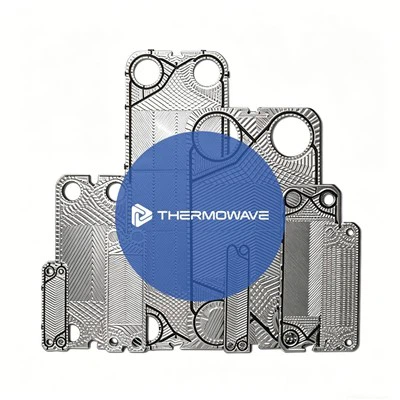
In summary, both PHE plates and gaskets can resist high temperatures to varying degrees, depending on the materials they are made from and the operating conditions. As a supplier, we have a wide range of options available to meet the diverse needs of our customers. Whether it’s a stainless steel plate with an EPDM gasket for a moderately high – temperature application or a nickel – based alloy plate with an FKM gasket for an extreme – temperature environment, we can provide the right solution.
PHE Plates & Gaskets If you are involved in an application that requires high – temperature – resistant PHE plates and gaskets, we are here to help. Our team of experts can assist you in selecting the most suitable products for your specific requirements. We are committed to providing high – quality products and excellent customer service. Please feel free to reach out to us for further discussions and to start the procurement process.
References
- Incropera, F. P., & DeWitt, D. P. (2001). Fundamentals of Heat and Mass Transfer. John Wiley & Sons.
- ASM International. (2018). Handbook of Stainless Steels. ASM International.
- Rubber Manufacturers Association. (2019). Elastomer Products: Properties and Applications.
Aflex Heat Exchanger Co., Ltd.
We’re well-known as one of the leading phe plates & gaskets manufacturers and suppliers in China. Welcome to buy bulk advanced phe plates & gaskets made in China here from our factory. If you have any enquiry about cooperation, please feel free to email us.
Address: No. 933, Yonghe Road, Nantong, Jiangsu, China
E-mail: sales@aflexphe.com
WebSite: https://www.aflexphe.com/
