If you’ve ever worked on a project that required lifting heavy equipment, adjusting large machinery, or moving structural components, chances are you’ve used a screw jack. But not all screw jacks are created equal. As a screw jack supplier who’s worked with everything from small machine shops to massive construction firms over the past 12 years, I’ve seen firsthand how choosing the wrong size screw jack can turn a smooth project into a costly delay, or even a safety hazard. A common question I get from new clients is: “What’s the real difference between a small-scale and a large-scale screw jack?” It’s not just about how much weight they can lift, either. The gap between these two categories touches on design, materials, use cases, durability, and even cost—and understanding that difference is key to picking the right tool for your job. Screw Jack

Let’s start with the basics: what a screw jack is, for anyone who might be new to the space. A screw jack is a mechanical device that uses a threaded screw to convert rotational force into linear motion, lifting or lowering loads. The most common design uses a worm gear to turn the screw, which prevents the load from slipping back when power is cut off—something critical for safety, no matter the size. Now, when I categorize screw jacks as small-scale vs. large-scale, it’s not a hard line in the sand, but there are clear, consistent distinctions that come from years of engineering and on-the-job experience.
First, size and load capacity. This is the most obvious difference, but it’s not just the number on the label. Small-scale screw jacks, which I define as those with a load capacity under 10 tons, are compact enough to move by hand, or with a small electric or pneumatic motor. A typical small-scale jack might be the size of a coffee can, with a screw thread that’s no thicker than your thumb. These are designed for light, precise tasks—think adjusting a small machine’s worktable to ensure cuts are accurate, lifting a engine out of a light truck, or positioning delicate lab equipment. When I first started in this business, I supplied a set of 2-ton screw jacks to a local woodworking shop that needed to level their new CNC router table. Those jacks were small enough for two guys to carry, and they adjusted in 1/16-inch increments, which was exactly what the shop needed to keep their cuts consistent.
Large-scale screw jacks, on the other hand, are built to handle loads from 10 tons up to 1,000 tons or more. These are not something you can lift by hand; a 50-ton jack weighs hundreds of pounds, often requiring a forklift to move. The screw threads here are much thicker—some are as wide as a dinner plate—with a gear system that can only be turned by a heavy-duty motor, or even a hydraulic power unit. Last year, I worked with a bridge construction company that needed to lift a 200-ton steel bridge section into place. We supplied six 50-ton large-scale screw jacks, each connected to a central control system so they moved in perfect sync. That’s a far cry from the small-scale jacks we sold to the woodshop, and the load difference is just the start of what sets them apart.
Next, design and internal components, where the real engineering difference lies. Small-scale screw jacks are designed for precision and ease of use, not just brute strength. Their worm gears are made of softer metals, like cast iron or bronze, which reduce friction and make turning the screw smoother, even when lifting a light load. The screw itself is usually a trapezoidal thread, which is self-locking—meaning once you stop turning the screw, it won’t move on its own. For light loads, this self-locking feature is perfect: you don’t have to worry about a table sinking while you’re cutting wood, or a small engine shifting unexpectedly. Small-scale jacks also typically have a plastic or light metal housing, to keep weight low and cost down. That works great for occasional use, but it’s not built to hold up to constant heavy use.
Large-scale screw jacks, by contrast, are built for durability and extreme load resistance. Their gears are made of hardened steel, which can handle thousands of tons of force without wearing down quickly. The threads are often Acme threads, which are stronger than trapezoidal threads for heavy loads, and they use a heavier lubrication system to prevent seizing under extreme pressure. The housing is cast steel or heavy-duty aluminum alloy, designed to withstand impact, vibration, and harsh outdoor conditions. The self-locking feature is still there, but it’s engineered to hold millions of pounds, not just a few. Another key design element for large-scale jacks is load distribution: when you’re lifting a 200-ton bridge section, you can’t have the load concentrated in one spot. Most large-scale screw jacks are designed to work in groups, with a centralized control system that syncs all jacks to move at the exact same speed, preventing uneven stress on the load. That’s a level of complexity you won’t find in a small-scale jack.
Use cases are another big difference. Small-scale screw jacks are versatile for industrial, commercial, and even residential tasks where precision and portability matter. I’ve seen them used in auto repair shops for lifting cars, in printing plants for adjusting press beds, and even in home workshops for lifting a foundation to repair a crack. They’re easy to store, easy to move, and don’t require a lot of power to operate. A small-scale jack might run on a 12-volt battery, so you can use it in a garage with no electricity, which is a big plus for small businesses or hobbyists.
Large-scale screw jacks are specialized for heavy, high-stakes tasks. You’ll find them in construction, bridge building, shipyards, power plants, and aerospace manufacturing. They’re used to lift entire buildings, move heavy construction equipment, align turbine components in power plants, and launch spacecraft components. Last year, I supplied a set of 300-ton screw jacks to a wind energy company that needed to lift a nacelle (the component housing a wind turbine’s generator) 200 feet in the air to attach it to a tower. That’s a job no small-scale jack could handle, and it required a level of precision that only a large-scale synchronized system could provide—even a 1/4-inch difference in height would have misaligned the nacelle and caused costly damage.
Durability and maintenance are also key differences. Small-scale screw jacks, built for light use, have a shorter lifespan if they’re used constantly. If you run a woodshop that uses your small-scale jack 40 hours a week, the gears will wear down in a few years, and you’ll need to replace it. They’re also less resistant to harsh conditions: if you use a small-scale jack outdoors in rain or snow, moisture can get into the housing and cause rust, which will jam the screw. Maintenance for small-scale jacks is simple, though—usually just a quarterly lubrication and a quick check of the threads, and that’s it.
Large-scale screw jacks, by contrast, are built for decades of heavy use. The hardened steel components can handle constant heavy loads, vibration, and exposure to the elements. They do require more regular maintenance, though—monthly checks of the gears, lubrication under high pressure, and inspections of the housing for cracks. But the payoff is a lifespan of 20 years or more, even with daily use. I have a client who’s been using a set of 100-ton screw jacks we supplied in 2008, and they’re still going strong, lifting heavy construction equipment every month. That’s a testament to how these large-scale jacks are engineered for long-term, high-stakes use.
Cost is another factor, and it’s not just about the initial price tag. Small-scale screw jacks are affordable, usually costing a few hundred to a few thousand dollars each, depending on the load capacity. That makes them accessible for small businesses, hobbyists, and occasional use. Large-scale screw jacks, though, are much more expensive: a single 50-ton jack can cost $10,000, and a set of synchronized large-scale jacks for a bridge project can cost hundreds of thousands of dollars. But for large projects, the cost of a wrong choice is far higher than the cost of the jacks. If you use a small-scale jack to lift a 100-ton load, you’re not just going to damage the jack—you’re risking the load, your workers, and millions of dollars in equipment. That’s why I always emphasize to clients that cost isn’t just upfront; it’s about matching the jack to the task.
Wait, but there’s a middle ground, right? I don’t just sell “small” and “large” screw jacks; there are medium-scale jacks that handle 10 to 50 tons, which bridge the gap. But the core differences I’ve outlined still apply, no matter where you fall on the scale. The key takeaway isn’t that one is better than the other—it’s that each is designed for a specific purpose.
Over the years, I’ve seen too many clients make the mistake of buying a small-scale jack for a large project, or vice versa, because they don’t understand the differences. A few years ago, a customer came to me complaining that his small-scale 5-ton jack had broken while he was lifting a 7-ton steel beam for a small addition to his shop. He’d thought more load capacity was just a bigger number, but what he didn’t realize was that small-scale jacks aren’t built for consistent, over-load use. That 5-ton jack was made for light, occasional use, and lifting a 7-ton beam every day would have worn the gears out in weeks. We were able to replace it with a 10-ton medium-scale jack, built for heavy, regular use, and he hasn’t had a problem since. On the flip side, I’ve had a client who bought a large-scale 200-ton jack to adjust their small machining table. That jack was 10 times the size, 10 times the weight, and way more expensive than they needed. They ended up returning it, because it was overkill for their task.
At the end of the day, the difference between small-scale and large-scale screw jacks comes down to engineering, purpose, and scale. Small-scale jacks are compact, precise, affordable, and designed for light, occasional use. Large-scale jacks are heavy, durable, specialized, and built for high-stakes, heavy loads. As a screw jack supplier, my job isn’t just to sell you a jack—it’s to help you pick the right one for your job, so you get the job done safely, on time, and without unnecessary cost.
If you’re not sure which screw jack is right for your project—whether you need a small jack for a workshop or a large-scale system for a construction job—reach out to discuss your needs. We can work with you to assess your load, required precision, and use case, to make sure you get the right product for the task. Don’t let a wrong choice turn your project into a headache—let’s find the perfect screw jack for you.
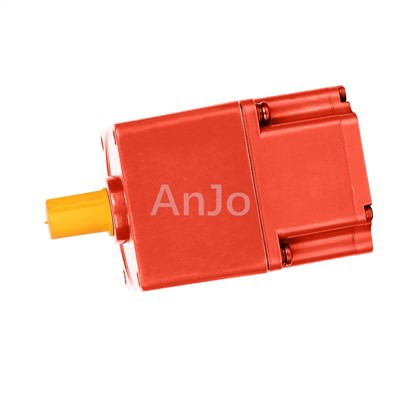
DC Brush Square Gear Motor References:
- American Society of Mechanical Engineers (ASME). “Design and Testing of Mechanical Screw Jacks.” ASME B22.1-2018, 2018.
- Kraft, E.G. “Mechanical Power Transmission: Screw Jacks and Actuators.” Industrial Press, 2020.
- Construction Equipment Manufacturers Association (CEMA). “Heavy Lifting Solutions for Infrastructure Projects,” 2021.
- Walker, J. “Precision Linear Motion for Small-Scale Industrial Applications.” Journal of Manufacturing Engineering, vol. 15, no. 3, 2019, pp. 45-52.
Hangzhou ANG Drive Co., Ltd.
We’re well-known as one of the leading screw jack manufacturers and suppliers in China, also support custom service. Please feel free to wholesale high quality screw jack made in China here from our factory. Contact us for more details.
Address: No.185, Jincheng Rd., Hangzhou 311202, China
E-mail: export6@angdrive.com
WebSite: https://www.angdrive.com/
