If you’re in the construction, tunneling, or foundation repair game, you’ve probably heard someone rant (or maybe you’ve ranted yourself) about a grouting job gone wrong. The fix sinks, the void doesn’t get filled, or the material leaks where it shouldn’t. 9 times out of 10, that’s not just bad luck—it’s grouting pump accuracy that’s off. As a grouting pump supplier, I get asked this question all the time: “What actually counts as ‘grouting accuracy’ for a pump, and why does it matter way more than just picking a machine that moves mud?” Let’s break this down like we’re chatting over a coffee, not a textbook, no jargon overload here. Grouting Pump
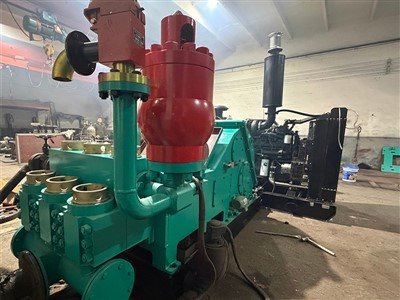
First, let’s ditch the fancy definition everyone throws around. Grouting accuracy isn’t a random number on a spec sheet. It’s how consistently a grouting pump delivers the exact volume of material you tell it to, at the right pressure, in the right spot. If your pump says it can push 10 liters per minute (LPM) but it’s actually spitting 13 one minute and 7 the next when you’re half-way through filling a 100-liter void? That’s bad accuracy. If pressure spikes 20 bar when you’re working on a delicate concrete slab, cracking it mid-job? That’s also accuracy (or lack thereof) playing spoilsport.
Why is this such a big deal for actual jobs, not just engineers’ spreadsheets? Let’s use a few real scenarios I’ve seen in the field, from contractors I work with. Last year, a guy doing foundation underpinning on a small residential project used a cheap off-brand pump he picked up for a deal. He needed to inject grout at 8 LPM to fill the voids under the foundation evenly, stopping when the void was full to avoid pressure blowing the foundation out. His pump bounced between 5 LPM and 11 LPM every 2 minutes. By the time he was 30 minutes in, half the void was over-filled (grout seeped through the basement walls) and the other half was still empty. He had to redo the whole job, and told me later his profit went down 20% just because he skipped a better pump.
Another common spot is tunneling. TBMs (Tunnel Boring Machines) rely on grout to seal the space between the shield and the tunnel lining—too little, and water seeps in, causing collapse. Too much, and you waste 1000s of dollars on material, and waste time pumping it. A tunneling contractor I supply has a project under a river; they told me their old pump had a 12% accuracy error. That meant they were pumping 12% more grout than needed for every ring—over a 500-meter tunnel, that added up to like 15 cubic meters of wasted grout, which at $80 a cubic meter? That’s $12000 down the drain. Switch to our line of pumps, which have a 2% error rate, and they cut their grout cost by that chunk, no lost time from fixes.
Now, let’s talk about what makes a pump accurate—because it’s not just a label you slap on a machine. Let’s get into the stuff that actually moves the needle. First, drive system. You’ve got two main types on grouting pumps: electric and hydraulic (wait, no—wait, actually, there’s also piston vs peristaltic, but let’s focus on accuracy drivers). Wait, no, let’s keep it simple: the drive system is the “motor” that pushes the grout. If it’s a cheap, uncalibrated electric motor, it’ll have speed fluctuations—one minute it’s running fast, next slow, so flow varies. Our pumps use closed-loop hydraulic drives, which adjust speed in real-time. So if your set flow is 10 LPM, it won’t jump; it stays dead on, even if the grout’s viscosity changes a little (grout gets thicker as it mixes, right? A good drive adapts, not fights it).
Then there’s control technology. A lot of budget pumps just have a dial you twist to set flow or pressure, no actual feedback. Our pumps have digital displays that track real-time flow, pressure, and even the volume you’ve pumped. You can set a target volume—say, fill 500 liters of grout—and the pump will stop automatically when it hits that number, no manual counting, no guessing. That’s a huge accuracy win. I’ve seen guys who used to have to stand by the pump for an hour, clicking a stopwatch, suddenly get to do other prep work while the pump runs exactly what they need.
Wait, but accuracy isn’t just flow. Pressure accuracy matters too. If you’re doing a job that needs low pressure (like injecting grout into hairline cracks in a historic building), a pump that can’t hold a steady 2 bar will blow the grout right through the crack, not fill it. For high-pressure jobs (like soil stabilization for a highway), you don’t want the pump spiking 5 bar over your set pressure, which can cause soil heave or even damage adjacent structures. Our pumps have pressure sensors that adjust instantly—so if pressure goes a little high, it slows down the pump to stay at your set point, no sudden surges.
Now, let’s be real: no pump is 100% accurate. Even the top-end ones have a tiny error, usually under 2% for good models, up to 10% for cheap ones. But what’s “acceptable” depends on your job. If you’re doing a small residential crack injection, a 5% error might be fine—you don’t need perfect precision for a tiny spot. But if you’re working on a high-rise foundation or a tunnel under a busy highway, that 5% (or worse, 10%) error is a disaster. You’ll waste material, risk structural damage, and lose time fixing messes.
I get it, price is a big factor. A lot of guys will grab the cheapest pump on Alibaba or whatever, thinking “it’ll get the job done”. But here’s the thing: a $500 pump that breaks mid-job and costs you $2000 in rework is way more expensive than a $2000 pump that does the job right the first time. Let me give you another example: a bridge repair job. The contractor used a budget pump, and the grout they pumped into the anchor bolts was off. The error in flow meant one bolt only got half the grout it needed. That bolt failed a load test, so they had to jack up part of the bridge, re-drill new holes, repump grout. Total cost: $15000. If they’d used an accurate pump, that would’ve been a $1500 job, no stress.
Wait, also—accuracy isn’t just about the pump itself. You have to maintain it, right? A piston pump with worn seals will leak, so flow drops, accuracy goes out the window. A peristaltic pump with a cracked hose will have inconsistent flow, no matter how good the drive is. I always tell contractors: check your pump’s seals, hoses, and calibration every 3 months, especially if you use it a lot. A $50 calibration once a quarter will keep your pump accurate, way cheaper than a redo.
I know this all sounds like I’m shilling my products, and to be fair, I am a grouting pump supplier, but I’m also a guy who’s been around this industry for 10 years, talking to contractors every day who’ve made these mistakes. The worst part isn’t wasting money—it’s the headache of redoing a job that was supposed to be straightforward. You don’t want to be the guy on the job site at 7 PM, covered in grout, mad because your pump let you down.
If you’re shopping for a grouting pump, don’t just look at the max flow or pressure on the spec sheet. Ask about accuracy: what’s the flow error rate? What about pressure stability? Does it have a digital control system that tracks real-time data? Those are the numbers that matter, not the flashy “max 50 LPM” line if you only need 10 LPM.

At the end of the day, grouting accuracy isn’t some fancy industry buzzword. It’s the difference between a job that gets done right, on time, and on budget, and one that drags on, costs you extra, and makes you want to throw your toolbox in the river. If you’re looking for a pump that’s consistent, easy to calibrate, and doesn’t let accuracy slip mid-job, feel free to reach out to chat through your project—no sales pitch, just a guy who knows what it’s like to be on the job side of things, trying to get the job done right.
Water Well Drill Pipe REFERENCES
- Construction Industry Institute. (2021). Grouting Technology and Equipment for Foundation Stabilization. Construction Research Library.
- American Society of Civil Engineers (ASCE). (2019). Specification for Grouting of Tunnels and Underground Structures. ASCE Press.
- International Association of Foundation Drilling (ADSA). (2020). Field Guide to Grouting Pump Performance and Accuracy. ADSA Publications.
- National Cooperative Highway Research Program (NCHRP). (2022). Cost Optimization of Grouting Operations for Highway Construction. NCHRP Report 928.
Hebei Zhongxin Machinery Equipment Co., Ltd.
As one of the most experienced grouting pump manufacturers in China, we also support customized service. We warmly welcome you to buy high quality grouting pump for sale here from our factory. If you have any enquiry about pricelist, please feel free to email us.
Address: Wangxizhang Industrial Zone, Zhao County, Shijiazhuang City, Hebei Province, China
E-mail: zxnjbzg@163.com
WebSite: https://www.hbzxdrilling.com/
